Research Projects
Latinidad Curriculum Initiative (LCI)
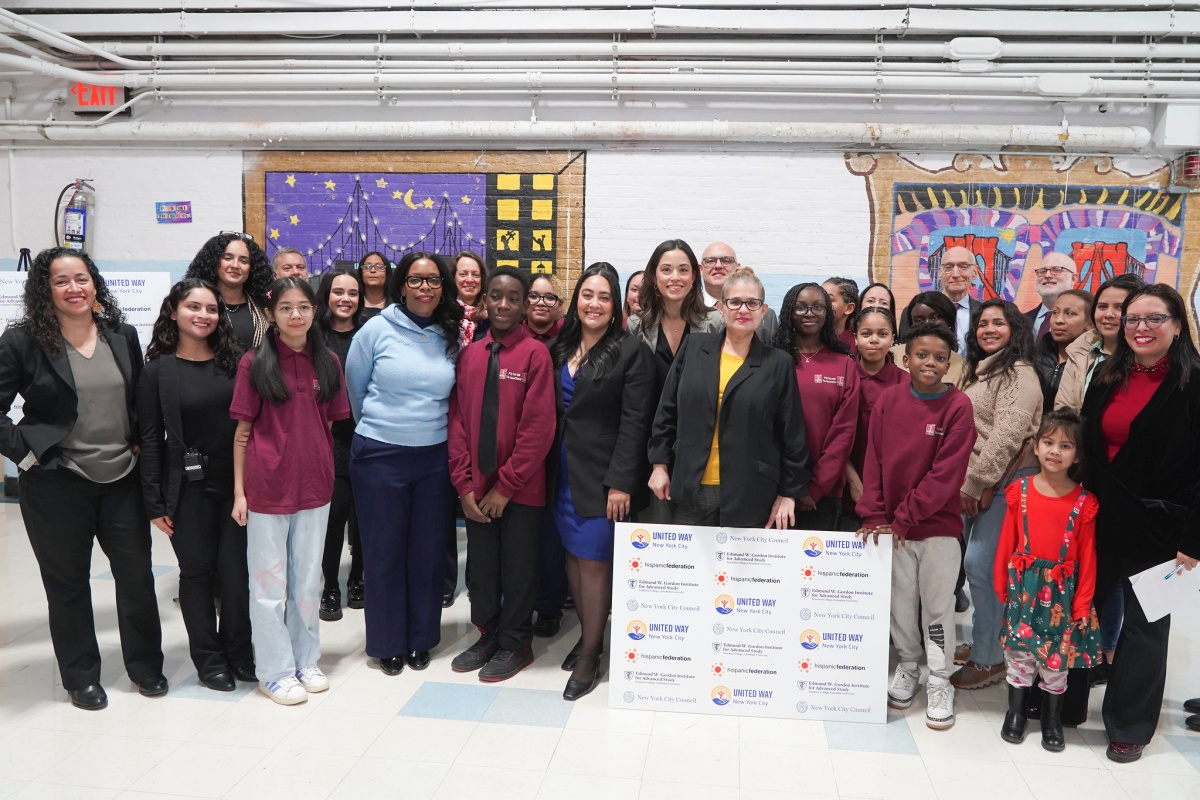
The Edmund W. Gordon Institute for Advanced Study is spearheading an ambitious new initiative to transform the way Latinidad histories and cultures are taught in New York City public schools. The Latinidad Curriculum Initiative (LCI), led by Professors Limarys Caraballo, Regina Cortina, and Ezekiel Dixon-Román, is being developed in partnership with United Way of New York City and the Hispanic Federation, with funding from the New York City Council. LCI aims to bring a culturally responsive curriculum to K–12 classrooms that honors the experiences of Latin American and Caribbean communities.
At the heart of the initiative is the goal to provide both educators and students the opportunity to explore, celebrate, and expand their study of Latinidad through interdisciplinary frameworks. Latinidad encompasses the shared cultural and historical commonalities of people from Latin American and Caribbean descent—often grouped under terms like Hispanic, Latino/a, Latinx, or Latine, despite the rich diversity these labels can obscure.
New York City operates the largest public school system in the country, serving over 900,000 students in the 2023–2024 academic year. Of these, 42% identify as having Latin American and/or Caribbean heritage, yet their histories and contributions remain underrepresented in most classroom materials. The LCI aims to address this inequity by offering resources that allow teachers to connect more meaningfully with students' identities and strengths, while also giving learners of all backgrounds a more complete understanding of the city’s social fabric.
Among the highlights of the accomplishments in Year 1 of this project are:
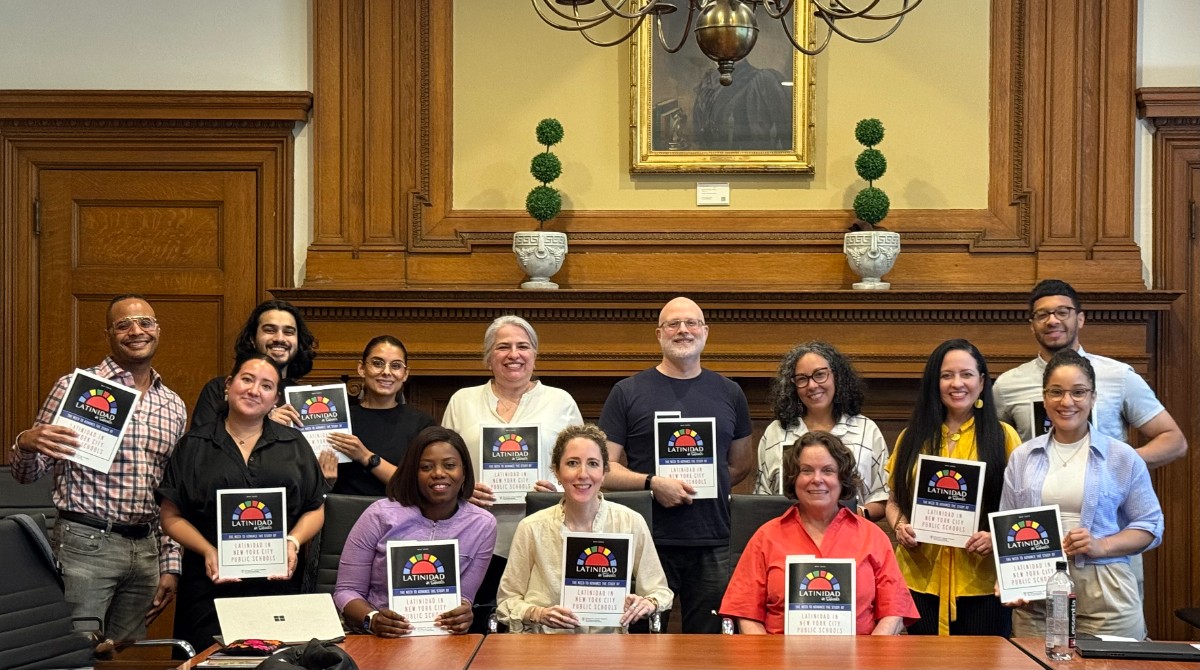
- Developing a strategic report entitled The Need to Advance the Study of Latinidad in New York City Public Schools, which is comprised of four sections: Section 1 introduces the background and demographics that underpin the need for a curriculum enhancing the education of Latinidad in New York City. Section 2 delves into the details of our conceptual framework that will guide content development and instructional design. Section 3 includes a lesson planning guide and four sample lesson plans associated with each grade level band. Section 4 looks towards the future and details our plan for the next steps as we continue to develop this innovative curriculum project.
- Creating a blueprint entitled Latinidad Curriculum Initiative: A Blueprint for NYC Schools, which includes an infographic picturing a visual summary of the conceptual framework that informs all aspects of the initiative and outlines its scope in practice. The conceptual framework for the LCI includes four foundational pillars: Belonging, Critical Skills Across Contexts, Multiple Ways of Knowing, and Dynamic and Inquiry-Based Learning. To illustrate how the new curriculum aligns with these pillars, the four sample lessons published in the report, “Sounds of Latinidad,” “Latinidad in My Community,” “Exploring Latinidad through Photography,” and “Mobilizing for Equity in Education: The Save Hostos Movement,” are mapped by grade level band K-2, 3-5, 6-8, and 9-12 onto the framework, which will provide a robust foundation for students to explore the beauty and multiple experiences of Latinidad.
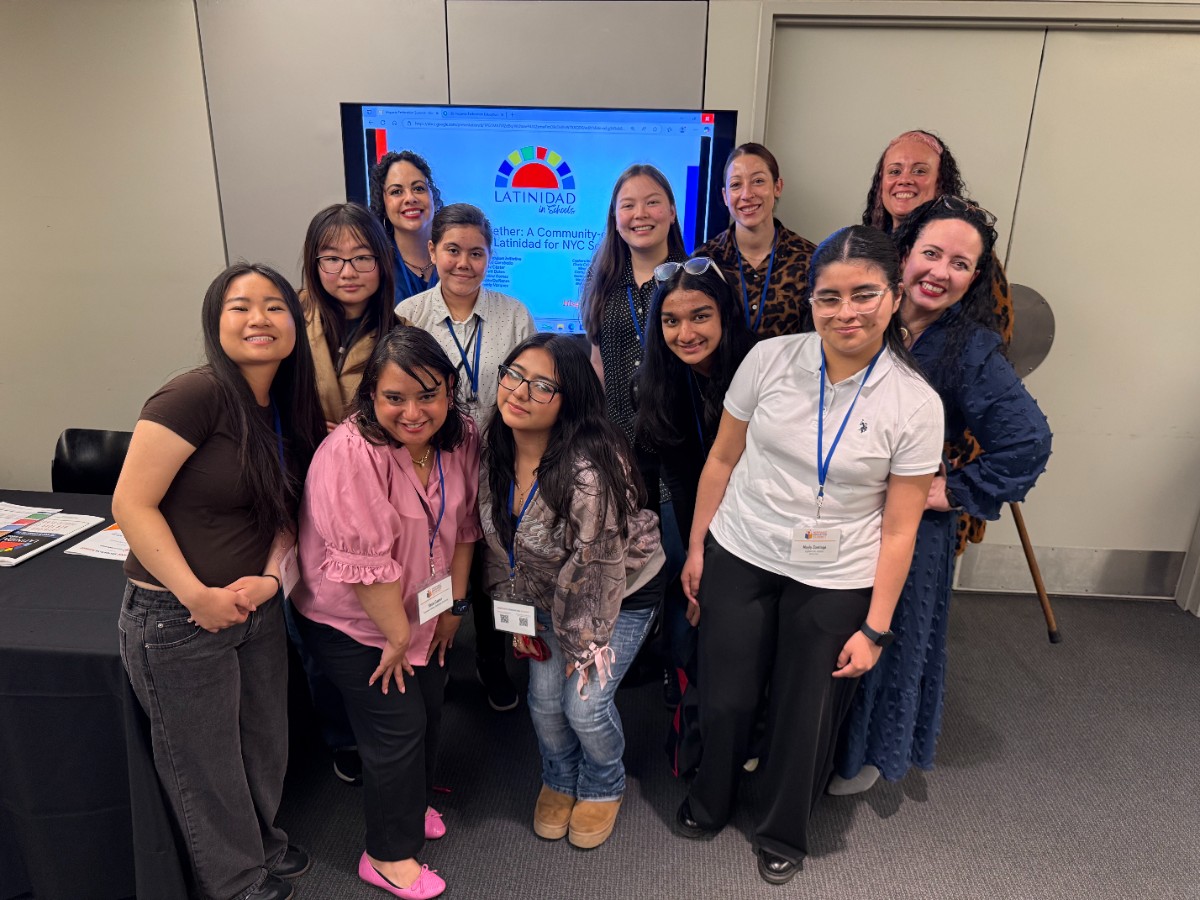
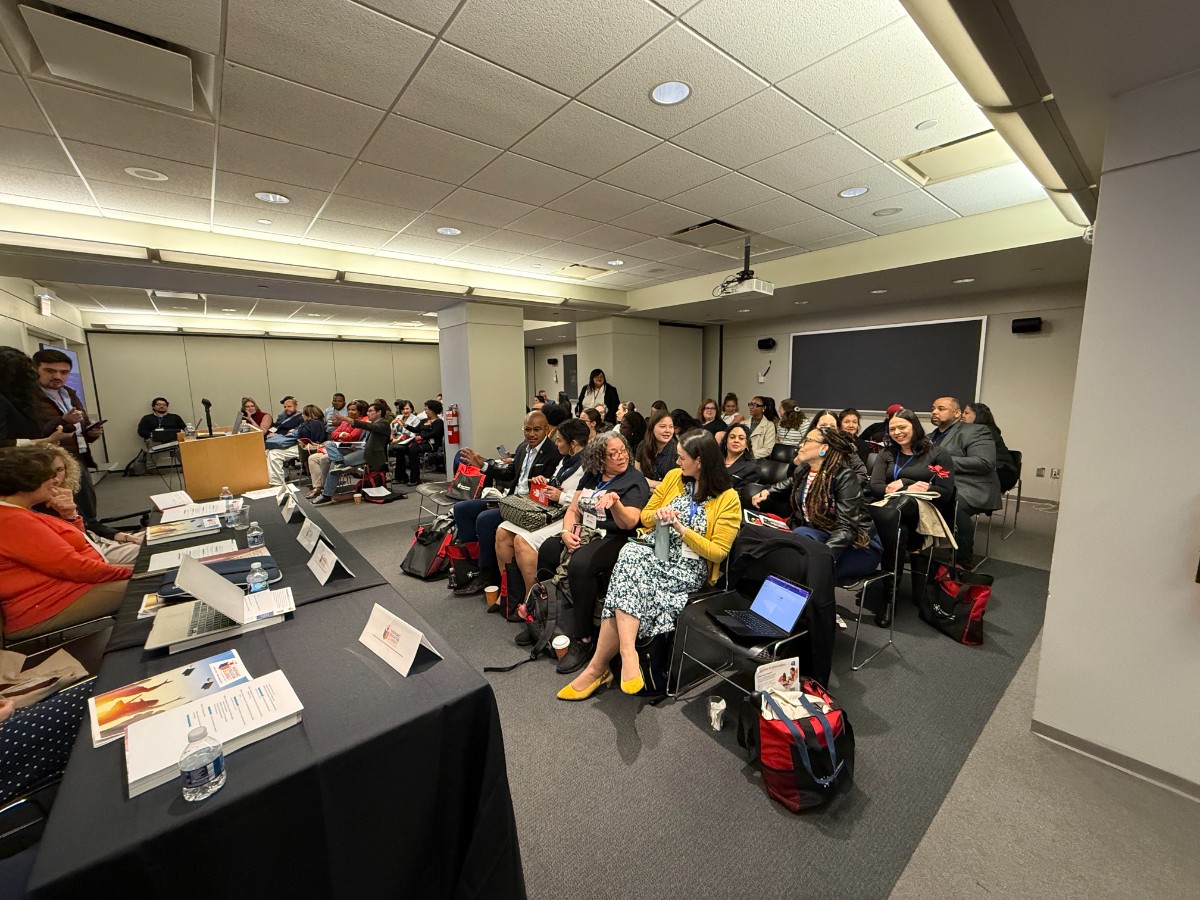
- Leading two interactive panels at the 2025 Hispanic Education Summit, showcasing the curriculum’s goals and classroom applications. In the session “Studying Latinidad in NYC Schools: Sample Lesson Plans,” participants were introduced to the interdisciplinary vision of the curriculum and had the opportunity to experience a sample lesson that explores diverse Latinidad narratives rooted in New York City communities. In the session titled “Learning Together: A Community-Centered Vision of Latinidad for NYC Schools,” educators, youth collaborators, and attendees explored the curriculum’s intersectional definition of Latinidad, its participatory design process, and the data and research that shaped the framework and curriculum mapping. Together, these presentations highlight LCI’s commitment to creating a dynamic and inclusive curriculum that centers student identity, lived experience, and the rich cultural contributions of Latino communities in New York City.
Plans for Year 2 include developing lesson plans across grades and subjects, along with a professional learning plan for educators. Year 3 will see the pilot implementation of the curriculum with school partners and the rollout of professional development programming. By Year 4, the full curriculum will launch, with comprehensive support for adoption by school districts.
Through the Latinidad Curriculum Initiative, the Gordon Institute and its partners are not only enriching public education—they are fostering a more just and inclusive future for all NYC students. To learn more about Latinidad in Schools, visit our website: https://www.tc.columbia.edu/latinidadnycschools/
Carousel
The Cultivation of Intellective Character and Competence: an Oral History Pilot Project with Dr. Edmund W. Gordon
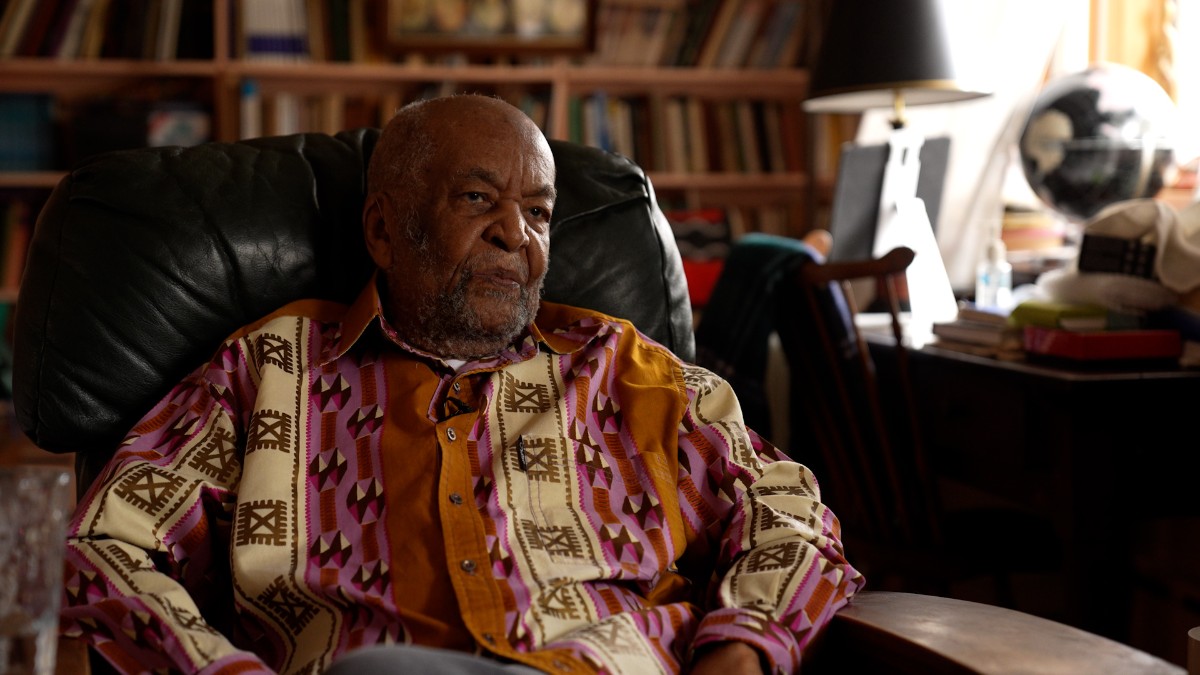
The Cultivation of Intellective Character and Competence: an Oral History Pilot Project with Dr. Edmund W. Gordon is a pilot initiative funded by the Spencer Foundation and dedicated to documenting the life and work of Dr. Edmund W. Gordon, a pioneering educator, psychologist, and scholar, who turned 104 this year. With support from a group of researchers led by Drs. Ansley Erickson, Maitrayee Bhattacharyya, Kenji Hakuta, and Michael Hines, this oral history explores the formative influences of people, institutions, and cultural movements that shaped Dr. Gordon’s life and work as a Black intellectual across a century of U.S. history.
In this first phase of the project, a series of in-depth interviews is being conducted to capture Dr. Gordon’s reflections on his development, including the role of influential women in his life, his formative experiences at institutions like Howard University and Teachers College, and his connections to Black intellectual traditions and leading cultural figures. The project seeks to illuminate his evolving philosophy and ongoing commitment to equity in education.
The artifacts produced as part of this project will contribute to the Edmund W. Gordon collection at the University of Texas at Austin, as well as at the Schomburg Center and Teachers College, Columbia University. They will also lay the foundation for future scholarship exploring the intellectual development of Black leaders, with the potential to inform pedagogy, equity efforts, and multigenerational dialogue in education. In keeping with Professor Gordon’s commitment to mentoring and intergenerational learning, the project includes two doctoral student research assistants, Dayna-Joy Chin at Teachers College and Beth Bass (TC M.A., 2024) at Stanford University.

AI and Black Youth Life: An Exploratory Study of AI Affects on Black Youth Within and Outside of Schooling
Drs. Ezekiel Dixon-Román and Nicole Sansone were awarded a rapid response grant from the Spencer Foundation for their year-long pilot study, “AI and Black Youth Life: An Exploratory Study of AI Affects on Black Youth Within and Outside of Schooling.” The study is being conducted in partnership with NYC’s District Five and NYC Digital Learning and Innovation Team and will conclude in February of 2026.
This study works with Black youth in grades 9-12 to try to understand how they are engaging with and understanding AI platforms in their everyday lives, both within and outside of school settings. Through both survey and interviews, researchers will explore open-ended questions, embedded experiments with GenAI prompts and output, and case study scenarios with participants to create a rich and nuanced picture of how AI is showing up for Black youth today. The study will address AI usage from a range of perspectives, such as whether Black youth think about AI as their “collaborative partners,” as a tool, or as a “cheat” when creating content, and whether or not Black youth trust AI and expect it to be “fair” and “unbiased.” Additionally, the study will do a close analysis of the reported most used AI software by Black youth, with a focus on the extent to which the software’s design is in continuity with Black youth’s understanding of it.
The rush to include AI-powered tools in educational settings is overwhelming, making it more important than ever for research on the efficacy and safety of these tools to keep pace. Research focusing on the affects of AI on Black youth education and everyday life is a particular gap in the landscape that this study seeks to address. Scholarship has already shown how embedded AI-driven technologies have the potential to exacerbate harm and discrimination for historically marginalized groups, raising new issues around equity and data justice. This study explores those challenges and extends the scope of inquiry by placing Black youth at the center of the study. Instead of only asking how AI is shaping the experiences of Black youth, we also ask, “How are Black youth influencing the uses and applications of AI tools?”
Lucy Zhang, a Doctoral Research Fellow and Ed.D. student at Teachers College, and Alicia Chatterjee MSEd, MSW, PhD, a Postdoctoral Fellow, will be overseeing the data collection process and supporting analysis. “AI & Black Youth” will culminate with three main outputs: a published report on the study’s findings that will direct a national research agenda for AI in educational settings; a national webinar that also addresses considerations for educator professional development on AI; and at least two scholarly publications addressing case studies that advance ethical considerations for AI, edtech, and racialized learners. The “AI & Black Youth” study represents the first of its kind in explicitly addressing the mutually co-constituting relationship between AI and Black youth.

Nurturing a Gordon Institute Community of Practice
A Community of Practice (CoP) is a group of individuals who share a common interest, profession, or goal and engage in collective learning through regular interaction. Members of a CoP collaborate to share experiences, develop expertise, solve problems, and innovate within their shared domain of interest. The Gordon Institute for Advanced Study has focused some of its research activities this year on creating a CoP among faculty, students, and staff.
Professor Felicia Moore Mensah, the Senior Associate Director of Research, collaborated with the Institute Faculty Affiliates and staff to provide programming to nurture our CoP. Fostering collaboration and shared learning among faculty affiliates is crucial to improving and meeting the goals of the Gordon Institute. We are building an infrastructure to support the work of faculty affiliates, students, and staff.
To increase grant activity and support faculty in securing external funding, the Gordon Institute offered a two-part workshop. The workshop was led by Dr. Ed Dieterle, a researcher and former program officer with extensive experience on both sides of fundraising, and co-sponsored by Caroline Ebanks and the Office of the Vice Dean for Research. The two interactive workshops covered essential strategies, including understanding funders’ perspectives, applying the Needs-Approach-Based-Assessments (NABA) framework to refine research ideas, and mastering effective communication using the Know-Believe-Do model. In small groups, participants learned how to navigate the proposal drafting process, analyze successful case studies, and reframe rejection as an opportunity for growth.
Building from these experiences, two Reading and Writing Saturday Retreats were held in the Smith Learning Theatre on the Teachers College campus. These two retreats provided additional opportunities for faculty, research teams, and students to come together to work on grants and other writing projects.
As we continue to build a research infrastructure, we want to support grant writing and publishing, and other research projects to reflect the effort and impact faculty and research affiliates are doing. Over the year, we experienced increased grant seeking and publications across diverse venues. The Gordon Institute is committed to deepening knowledge and enhancing practice through our CoP and providing regular spaces for our community to grow, learn, and support one another, while also informing the broader audiences to advance the mission and goals of the Gordon Institute.